
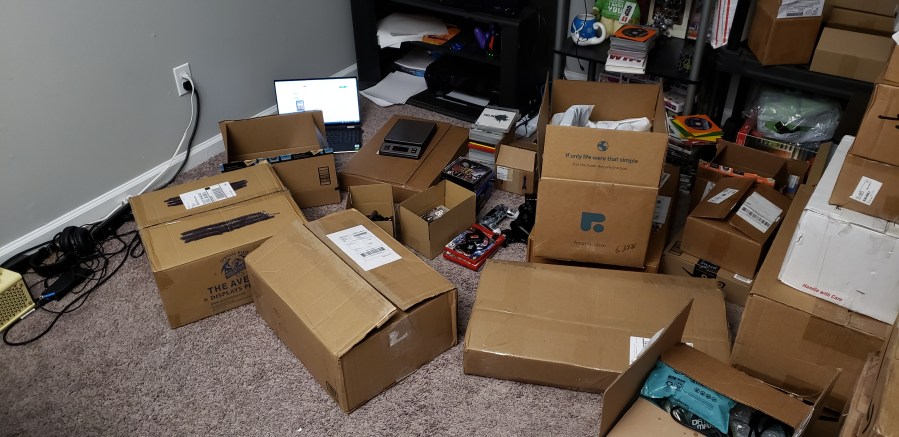
“Is it hard to start selling items on eBay?”
I get this question a lot (and there are always different understandings of the barriers to entry to eBay selling). The process itself of getting set up on eBay and listing your first item is not hard (after all, eBay relies on sellers to keep their marketplace stocked), but learning the ropes will come with its challenges if you’re looking to make eBay selling a regular thing.
There’s no need to be discouraged though! Everyone needs to start somewhere. This list certainly isn’t exhaustive, but here are some common roadblocks and ways to overcome them.
Figuring out What to Sell
I’ll start with the biggest question — “what should I sell on eBay?” If you’re just taking the first step with eBay, you’re probably wondering what sells well, what doesn’t have much competition, or what the “next big thing” could be. It’s totally natural to take that approach, but the reality is that there is not a hard and fast answer to what you should sell.
If you’re just starting out with eBay and want to make a couple extra bucks, look around your house for items you don’t use anymore. Video games, clothing, books, appliances, toys, and electronics are always in demand, plus you already have them in your possession.
From there, think about the types of items that interest you so you can figure out your niche. For me, it was Legos and video games. I enjoyed them enough to want to learn more about them, understand their values and market, and learn how to source them. This of course took years to fine-tune, but it’s always been fun handling items that I would realistically want for myself.
Dabble around a bit! You can go to any thrift store and find a variety of items under $10. If an item ends up not selling or working out, you’re only out a few bucks and the time you put into it. It’s kind of a rite of passage to lose on some items and figure out the hard way that an item category isn’t for you, but you’ll learn even more from the duds than the successes.
And remember that you can sell pretty much anything on eBay. I’ve sold a muffin-shaped Skittle, old office equipment, NASCAR memorabilia, obscure band tees, reverse glass paintings, you name it! You don’t need to think strictly in terms of traditional retail items, especially because eBay is probably the biggest marketplace for used items.
Starting with a Fresh Account
Getting your first few sales as a brand new eBayer can be difficult as you’re working to build up your reputation and feedback. When you have a low number of positive reviews, a potential buyer may feel like you’re inexperienced and be less likely to buy from you.
We all need to start somewhere of course, so I recommend making a handful of small purchases on eBay to build up your feedback score. Your score includes all feedback from both items you’ve bought and sold, so take advantage of building up your score initially to show other users that you mean business.
Have more questions on eBay feedback? This blog post should clear them up.
Learning How to Take Pictures of the Item
Taking pictures of your eBay items seems pretty self-explanatory, but you can really stand our with solid visuals. Here are some quick pointers:
- Make sure pictures are clear and have decent lighting (the average smartphone will take care of this for you)
- Include all items within the first image of your listing — some new users take individual pictures of all of the items included with the purchase, but that can make potential buyers think that only what’s show in the first image is included. If you’re selling a lot of action figures, make sure all figures and accessories are shown in the first image
- In that vein, make sure you put some space between items. This makes it easier for buyers to check out individual items within your listing
- Make sure you have a clear background (and it doesn’t need to be all-white. I use vinyl flooring for all of my shots!)
- Make sure you include close-ups of any damage, model numbers, or other important aspects — this helps reduce the chance that a buyer will miss key information that could lead to a return
- You’re allowed up to 12 pictures, so don’t be afraid to use them! Buyers may not feel confident about a listing with a single image of the item, so even adding pictures from the back and side of the item can go a long way
Whenever possible, avoid using stock images on eBay (unless you’re selling multiple quantities of a brand new product). Buyers want to see exactly what they’ll be receiving and what condition its in, so use your original pictures above all else.
Learning How to List Items on Ebay
eBay’s listing tool is pretty simple to navigate. To list an item, you just need:
- A title
- Up to 12 images
- A description
- Pricing
- Shipping options
- Your policy selection for returns
eBay also has an extensive product catalog with pre-filled item specifics for a range of items. Whenever you can match your listing to an eBay catalog entry, do it! You can always update the title and description as needed.
Just like it’s important to have clear pictures, you need to have a clear item description that lays out exactly what the buyer will receive and its condition. Even if something seems obvious, it never hurts to call it out directly to ensure that you’re setting the right expectation for the buyer.
Not sure what to include in your item description or how detailed you should be? Here’s everything you need to know about writing a comprehensive eBay item description (along with some ready-to-use templates).
How Do You Price an eBay Item?
This is another super common question! In the end, the buyers ultimately determine the selling price of any item on eBay. Even if it’s selling for more (or less) on Amazon or on retail shelves, you can generally expect an item to sell for around the price of similar previously sold items.
If you go to any search on eBay, you can filter the search by “Completed” and “Sold” items. Completed items are listings that have ended on eBay, either because they were sold (these have green prices) or because they were unsold (these have red prices). Sold items are only the sold completed items, and they’re the best benchmark for pricing an item.
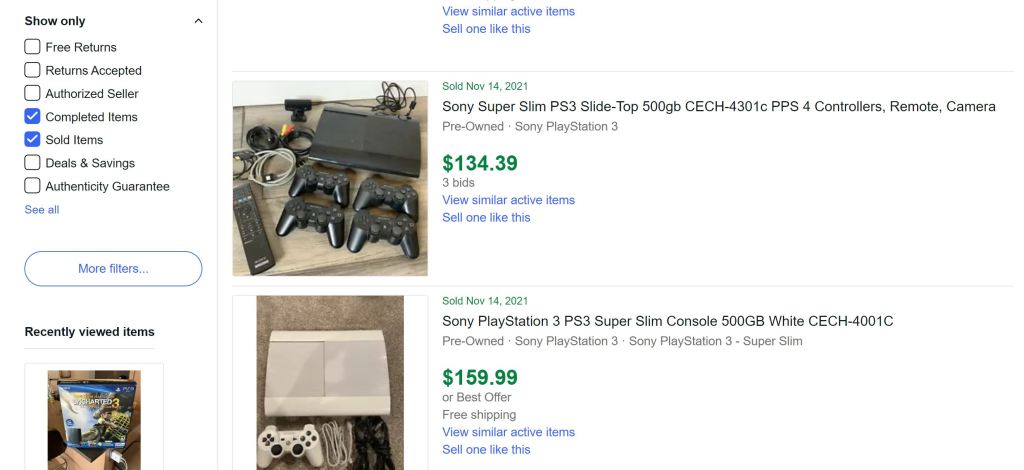
There’s one more layer to consider within sold listings: whether the item was sold through auction or buy-it-now. An auction can produce an outlier (an item selling way above or below market price), but buy-it-now listings tend to be more telling of the current market price. Also be sure to factor in condition, whether or not the item is complete/functional, and if it’s being sold in a lot with other items vs alone. You’re looking for listings that are really similar to yours for the best sense of the current value.
Now, that doesn’t mean that you need to price your item at the current market value. If you’re looking for a quick sale, you might price it cheaper. If you feel like it’s worth more than you’re currently seeing, you can set the price higher and see if it ends up moving — just be sure to enable “best offer” on your buy-it-now listings for the best chance at making the sale.
Learning How Shipping on eBay Works
Part of the fun of selling on eBay is navigating the United States Postal Service (USPS) and maybe FedEx or UPS. The post office is pretty much a place you only go to if you need to, and you tend to let the employees do most of the work for you (helping with packing the item, buying postage there, etc.). If you’re not making the trip to the post office very often, it can make sense to let them do the legwork. But if you’re planning on selling a bunch of stuff on eBay, you’re going to get more familiar with the post office. The good news is that it’s a lot easier than it seems!
The post office tends to be stressful because you need to stand in line and you’re relying on someone else to handle the details for you. When you sell something on eBay, you can actually handle everything from home and simply drop off the package at the post office without needing to wait in line.
When listing your item, eBay will let you select your shipping method options. In general, anything under 16oz will ship via USPS First Class Mail, and anything between 1lb 1oz – ~30lbs will ship via USPS Priority Mail. FedEx and UPS tend to make more sense for bulkier, heavier items. As long as you have your shipping options set (and you enable calculated shipping for any items over 1lb), it’s as easy as printing the label from home after the buyer has paid, packaging the item (covered in the next section), and dropping it off at the post office.
Printing the label through eBay automatically uploads the tracking number to the item page and notifies your buyer, so you don’t need to manually upload it later. Once you’ve been selling on eBay for a while and upholding a decent reputation, you’ll also be eligible for shipping discounts on most labels as well/
Learning How to Pack Items Safely
If you’ve ever purchased something from an individual seller online, chances are you’ve received something in the mail that ends up trashed (or miraculously doesn’t somehow) due to poor packaging. While all mail carriers are guilty of mishandling packages and serious damage outside of your control can rarely occur, you need to make sure you’re always prepared for the worst. Here’s what that looks like:
- Always make sure that nothing is moving inside the package. You should be able to pick it up and shake it without anything rolling around (unless it’s supposed to, like a Lego set)
- You’ll hear this referred to as “filling the void.” Newspaper, bubble wrap, packing peanuts, and the like can all be used to fill in the space between the item and the rest of the box to prevent the item from moving around and absorb shock if the package is mishandled.
- When you can help it, avoid direct contact with the sides of the box, as it’s always better to have a buffer between the item and box itself. That way, if a corner if the shipping box is crushed, there’s less of a chance that a corner of your item will be crushed as well
- Only use a box that’s appropriately sized for the item. I’ve learned the hard way that forcing an item into a box that’s too small never ends up well. Remember that your item will almost definitely have other boxes stacked on top of it, so there should be plenty of clearance between the top of your item and the top of the box.
- Quick story: I once sold a $200 turntable for my father-in-law but used a box that was too short. I figured I would be safe if I added some bubble wrap on top and taped down the top box flaps as best as I could, but man, how the tables turned. The knobs ended up getting crushed and busting through the top of the shipping box, rendering the item unusable, so the buyer returned it and got a full refund. But I couldn’t ask my FIL for the money back and ate the cost. That lesson stung, but I only needed to learn it once.
- Always assume that the package will be mishandled. If you’re on the fence about adding some additional packing material, just do it. It’s always better to go the extra mile to be safe than roll the dice and risk a busted item
- Tape the box from all three angles:
- Around the middle lengthwise
- Around the middle widthwise
- Around the middle sidewise
You’ll get better at packaging as you go, but always err on the side of caution.
Figuring out How to Grow
Growing your eBay business is really the secret sauce. Someone who’s just selling odds and ends casually for some extra cash each month probably won’t be too worried about scaling their business, but someone looking to turn it into a full-blown side hustle (or full-time occupation) will need to be flexible in and observant of multiple markets.
The winning strategy here is super personal to you and what you’re selling, but it’s something you’ll figure out as you keep selling — where to reliably source inventory, the best process for cleaning and testing, how to safely store items, how to standardize your fulfillment process.
If you’re just starting out with eBay and already thinking about the questions above, take a breath! You’ll get there in good time, but just start with your first batch of items and see how it goes. You also don’t need to turn it into an empire — eBay profits paying for your phone bill or a night out each month is such a huge win in my book.
So What Next?
If you’re on the fence about starting to sell stuff on eBay, let this be your sign to get moving! But if you’re feeling stuck, I’d love to help. Comment down below with what’s giving you trouble, and we can figure it out together!
 Just The Flip
My experience was that ego-Bay instantly permanently suspended my account and refused to explain why. I had only managed to list one innocuous item (a camera) and they labelled me “a threat to our community”.
They need to be shut down.
LikeLike
Wow, that is lame. I know that eBay is trying to crack down on fraud and shady buyers, but that unfortunately means that well-intentioned sellers can be wrongfully flagged. If the camera was particularly expensive, that may have caught eBay’s attention. I’m not sure why they would have suspended your account, but hopefully you were able to sell the camera after all!
LikeLike