

Whether you’re just getting started with selling on eBay or are a veteran seller, you always need to be on the lookout for shady buyers. Now, it’s never fair to assume that every single buyer is out to pull one over on you — keep in mind that, just like you, some buyers have been burned before. You can’t blame them for being cautious, but they also can’t blame you for doing the same!
That said, there are some slimy buyers on eBay. There are buyers who are not worth the time or hassle. You know those people who bring their adult child into a restaurant, argue to get the free kid’s meal, complain about the rest of the meal, and threaten to leave a scathing review if they don’t get the entire meal comped and the deed to the owner’s house? Yeah, they know how to use eBay, too.
But you can save yourself the headache and avoid unpleasable buyers by keeping an eye out for the eBay buyer red flags below.
1. You get a bad gut feeling
This one is probably a given, but it almost never fails. Sure, it takes a bit of time to cut your teeth on eBay selling and better hone this sense, but remember that you aren’t required to sell anything to anyone on eBay.
If someone rubs you the wrong way, definitely pay attention. Think about it — it has to take a lot to feel weird about someone you haven’t even interacted with face-to-face. While all of the scenarios below should raise an eyebrow, trust your gut! Unless you had Taco Bell the night before. That could skew your radar a bit.
2. Asking a ton of questions
eBay’s messaging feature exists for a reason of course, but be wary of a buyer who’s pummeling your inbox. I touched on this in my responding to eBay messages post, but excessive messaging is a strong signal that a buyer is exceptionally needy.
Now, if someone is asking a legitimate question or two, that’s one thing. Someone asking 10 legitimate questions, while they’re within their right to do so, probably is higher touch than you want to deal with. Especially if you’re selling anything electronic, a buyer like this one may expect you to play a tech support role when they receive the item (or they may think it’s not working due to user error).
In instances like these, I usually ignore the buyer (if they didn’t blow up my inbox) or block them (if they did blow up my inbox). Assume that however they act from the start is how they’re going to act the entire transaction.
Now, if they already purchased the item and then open up the can of crazy, that’s a little bit more difficult. These are also pretty frustrating, like why would you commit to buy something before getting your questions answered?! You normally don’t want to cancel a transaction out of the blue, but sometimes you can actually get the buyer to request the cancelation. I’ll say something like:
“I want to make sure you’re happy with your purchase, but it doesn’t sound like this item will do it for you because of [reason]. I can still send it your way, or I can refund you in full so you can find something more fitting.”
You’re trying to avoid negative feedback and/or a painful return in this case, so use your best judgment and see if you can reason with the buyer.
3. Trying to negotiate outside of eBay
If you do this, Mr. eBay himself will put your soul up for auction…or so I’ve heard. Selling outside of eBay is directly against eBay policy, and they are real sticklers on this one (how else will they get their precious final value fees?).
In case you don’t know this, eBay can and will monitor your eBay messages and keeps a full record of them. Any communication you have with your buyers should always occur through eBay, that way you have a paper trail that’s accessible by any eBay rep.
Local pickup is one thing — if a buyer near you wants to buy your item and skip the shipping process, that’s totally cool! You do have the option to sell an item locally through eBay and complete the transaction through them, giving you buyer and seller protection…along with the eBay fees of course. You may opt for other payment methods for the local transaction, but always be mindful of the messages you’re sending through eBay.
If a buyer is asking you to send an invoice or accept a payment outside of eBay, run. They are 100% trying to pull a scam on you. Not only do you lose seller protection, but I would bet my sweet Bionicle collection that they file a chargeback/cancel the transaction and steal your money.
It’s best to straight up block these users. You can send them a “that’s against eBay policy” message if you feel so inclined, but there’s a minimal chance that anything worthwhile will come from this crowd.
4. Tons of negative “feedback left for others”
I didn’t learn about this feedback feature for a while, but it’s saved me quite a few times. If you go to any user’s feedback profile, you’ll see a tab called “Left for others”:
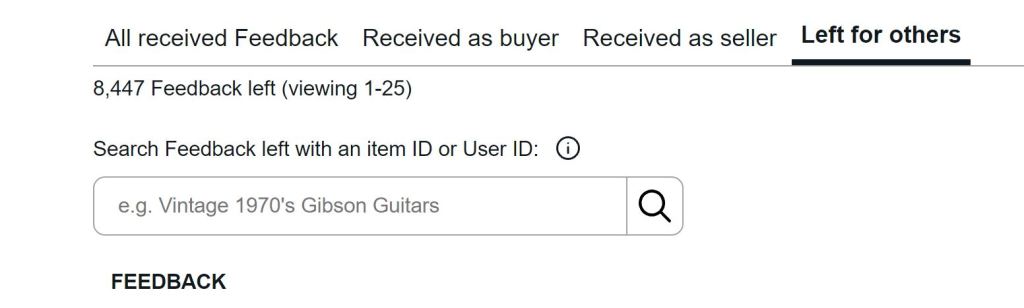
This filter will pull up any feedback that the user has left on eBay, both as a buyer and as a seller. Not gonna lie, this can sometimes be shocking. I’ve seen buyers who have almost exclusively left negative feedback — how could anyone have such an overwhelmingly negative experience from tons of different eBay sellers? It’s almost like they’re…exploiting the system…
Even if you don’t particularly care about your feedback rating, I feel that feedback left for others is a solid indicator or return likelihood. If several items haven’t been up to their standards, have gotten “lost in the mail,” or have been “missing pieces,” the buyer may be abusing eBay’s feedback system to get free/partially refunded items.
Now, it’s possible that they have back luck! The buyer may also be leaving only negative feedback and not taking the time to leave positive reviews. Definitely read the feedback to see if it that could be the case and the negs seem warranted.
If anything seems off, don’t sell to the buyer. If they’ve already purchased the item, reach out and let them know that you want to meet their expectations (and if you can’t maybe it’s best if you refund and cancel).
5. Requesting you to ship to a different address
If an eBay buyer asks you to send the item to a different address than the one they provided during checkout, there’s a very strong chance that they’re trying to scam you. Their plan is to open an “Item Not Received” case since, technically, they did not receive the item at the address they provided (which is the only one that eBay looks at). No matter what, only ship to the address that the buyer set during checkout. Shipping to an address outside of what they buyer provided instantly voids your seller protection from eBay.
Now, if the buyer is claiming that they entered their address incorrectly (i.e., they were one digit off or they just moved and forgot to update their address), you’re in luck! eBay has a cancelation option specifically for situations like this:
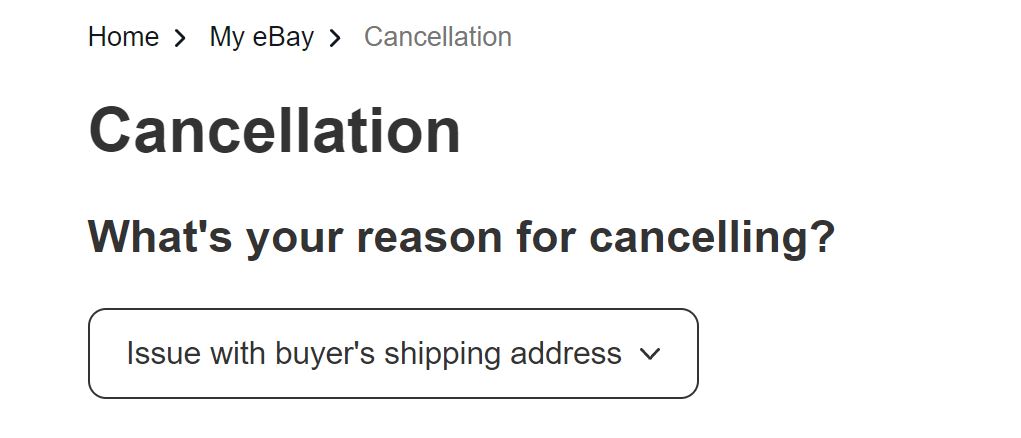
As long as you select that option when canceling the item, you won’t receive seller defects or anything of the sort on your account. Once you cancel and refund the item, you’ll be able to relist it. From there, the buyer is able to rebuy the item and enter the correct shipping address (if they were being honest before). In my experience, most buyers who just had a small address update tend to go through the purchase process again. I always send a message outlining eBay’s policy and the rebuying process, assuring them that it’s a necessary step for us both to be covered by eBay.
If it’s a legit request, they’ll normally be willing to cooperate. If they’re looking to scam you, they’ll move to their next victim (and someone waaay cooler will end up buying your item).
6. Excessive/unrealistic requests
This one goes hand-in-hand with the “Asking a ton of questions” red flag. I’m talking about the self-proclaimed collectors who demand that their copy of Shrek 2 be triple wrapped with bubble wrap, encased within a tomb of packing peanuts, and tucked safely inside a Kevlar-reinforced box that can hold 1000 pounds.
Okay, maybe it’s not that excessive, but some eBay buyers feel like they’re entitled to special treatment and they are shameless in asking for it.
Before they make a purchase, they may request specific or excessive photos. (Side note: if you’re selling clothing of any sort and they ask for a picture of you wearing it, that’s an insta-block. Do not entertain creepy dudes!)
I once had a buyer ask me to take a picture of an item outside in the grass for optimum lighting. And that was our first interaction! Imagine what else they would feel like they could get out of me if I obliged.
I’ve had other buyers request that items are sent to them in boxes instead of standard bubble mailers, with free shipping of course. Sometimes you bite the bullet and avoid the confrontation, other times you can offer those packaging options at a premium.
In a similar vein, watch out for buyers who ask if/demand that an item can be delivered by a specific date. Once the item is in transit, it’s out of your hands and you are not required to give any guarantees. If it seems like the buyer’s expectations won’t be met, it’s best to let them go somewhere else.
If you haven’t sold to them yet, block them before they have the chance to buy from you. You may get some salty messages, but they are not worth your time.
If you sold to them already, consider sending the “I want to make sure I meet your expectations” message. Sending some additional pictures or highlighting any flaws could help the buyer back out of the sale if it’s not up to their standards.
7. Sob stories
You’re bound to encounter at least one of these messages while you’re selling on eBay. While sob stories definitely aren’t exclusive to eBay, they are frequent.
A sob story buyer will come to you and severely overshare untrue/exaggerated personal information in an attempt to make you feel sorry for them. Some people honestly believe that they’re entitled to a discount, others just want to test the waters to see what they can get.
I once had someone haggle me down and tell me that they couldn’t afford to feed their children. I’m no financial advisor, but they probably shouldn’t have been trying to buy Borderlands gun codes.
While it’s totally possible that someone could be in an extreme situation and is really putting themselves out there to see if they can catch a break, it’s usually not that genuine unfortunately. It’s always up to you if you’d like to entertain someone like this and offer them a discount for being disabled/a veteran/a single parent/a widower/a student/a man with glass bones and paper skin, but my recommendation is to block and move on.
It doesn’t matter if Timmy’s 10th birthday is coming up or if their car broke down, everyone has their own stuff going on (including you), and you are not obligated to right any supposed wrongs for a stranger.
8. Aggressive haggling
Another borderline rite of passage for eBay sellers is fielding an aggressive buyer. Common bargaining tactics could include:
“I can get a brand new one for the same price”
“This only costed half of your asking price back when it was in stores”
“It’s an old, outdated item that’s probably going to break soon”
“No one’s going to buy it for that much. You might as well sell it to me”
I’ll tell you, a good transaction rarely works out with buyers like these. Some people are used to hardball tactics and think it’s all part of the buying process, but the reality is that these buyers think you are stupid. They’re trying to downplay the value of the item that they’re obviously interested in, otherwise they wouldn’t have messaged you. There could be similar offerings on eBay, but they must want your item for a reason.
It could be that they’re testing the waters and looking to take whatever bargain they can get. If you feel like dealing with them and don’t back down, they could snap out of it and buy the item if they’re truly interested (though you risk a return request or other issues since they’re likely to become overcritical).
What’s more likely is that they’re trying to bully you into doing what they want, and you’re probably not the only eBayer they’re harassing. They may send 25 messages a day, but if they get even one deal from their pestering, they’ll keep it up.
It’s best to not give these guys the time of day (unless you end up selling your “overpriced” item and want to let them know it’s no longer available). If they already purchased an item from you and then try to start talking discounts, you do not need to entertain that. Simply offer to cancel and refund if they’re not happy with the price (and be sure to choose “Buyer asked to cancel” when filing the request).
9. Partial refund fishing
Partial refunds are kind of a plague on eBay. No matter how long you’ve been selling, you’ve probably noticed that eBay favors the buyer almost religiously. I’m all about buyer satisfaction, but some buyers take advantage of eBay’s policy.
One of the most common examples is a buyer who has some sort of the issue with the item once they receive it. Maybe a piece is missing or there’s a smudge that they couldn’t see in the pictures, but it tends to be a small gripe in this scenario. But wait! They’ll completely overlook the defect and leave you an awesome review if you send them a partial refund!
Again, these requests can be legitimate, but here is what you should always do in this situation: let the buyer know that you’re sorry for the hassle, but you don’t give out partial refunds. However, you will happily refund them in full if they send the item back in the same condition in which they received it.
You’d be surprised at how many buyers vanish after receiving a message like that. “Wait, I have to send the item back? I don’t just get free money?”
At the same time, a buyer with a legitimate request would probably be willing to send the item back. Pro tip: in that case, be sure to weigh the cost of your return shipping and such. It may actually be cheaper to send the partial refund than deal with the return hassle.
Buyers fishing for partial refunds are just looking to see what they can get away with. Give them what they want, and they’re definitely going to do it again. Stand firm, and we may see less of this buyer behavior on eBay over time!
And one last thing — never negotiate with a buyer who is threatening to leave you negative feedback. That’s called feedback extortion (here’s eBay’s policy), and it’s one of the elusive “get out of jail free cards” as an eBay seller. In cases like that, you’ll still need to make right with the buyer if there was an issue on your end, but any feedback the buyer leaves will be removed by eBay.
Can I trust anyone on eBay?
The short answer — yes! An overwhelming majority of the buyers you encounter on eBay will not give you any trouble.
The long answer — still yes! And it’s so important to avoid adopting a mindset where you feel like all eBay buyers are out to get you. While you’ll naturally be skeptical of buyer claims against you, you can’t simply dismiss all of them. You are human and will make errors. Packages will be mishandled or lost in the mail (not your problem, but sometimes your responsibility). You need to take the bad with the good, and eBay is no exception.
That said, you should be alarmed if you’re consistently dealing with difficult buyers and/or return requests. That could be an indication that there’s an issue with your listings or it’s time to shift into a new market.
Feel free to share any crazy eBay buyer stories of your own! Now go list!
 Just The Flip
Pingback: What Flipping Means to Me: Why I Sell Stuff on eBay – Just The Flip
Pingback: The Ultimate Guide to Leaving, Responding to, and Removing eBay Feedback – Just The Flip
Pingback: eBay Selling Tips: How to Set the Right Buyer Expectations – Just The Flip